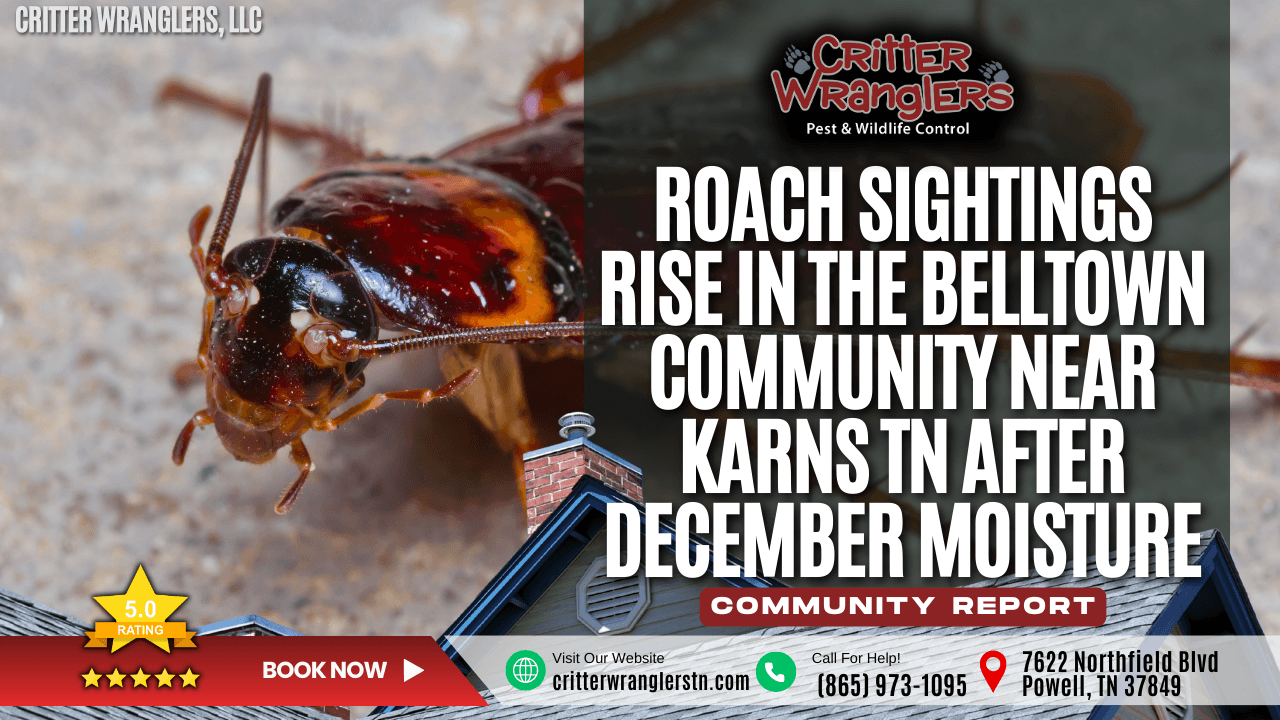
In Belltown near Karns, December moisture correlates with more roach activity and sightings. Common players include American, German, and Oriental cockroaches seeking damp basements, kitchens, and entryways. December rain and indoor moisture push roaches into sheltered indoor spaces, especially where plumbing and food scraps persist. Homeowners should seal entry points, fix leaks, and eliminate standing water. Regular sanitation and traps help monitor hotspots. Persistent activity may require a professional assessment for targeted control opportunities. More tips follow.
Key Article Points
- December moisture correlates with increased roach activity in Belltown, especially hotspots like damp basements, kitchens, and entryways.
- German, American, and Oriental cockroaches are commonly observed near Karns, exploiting plumbing and stored goods for moisture shelter.
- Indoor moisture and warm interior months drive activity, with late spring and fall showing heightened presence due to stable indoors.
- Prevention measures—sealing entry points, eliminating moisture, and sanitation—reduce harborages and curb reproduction.
- Regular monitoring (traps, logs) and professional verification help identify nests and adjust control strategies.
Moisture-Driven Roach Activity in Belltown
Moisture from December conditions has correlated with increased roach activity in Belltown, particularly around damp basements, kitchens, and entryways. This pattern aligns with localized roach behavior indicating heightened activity during humidity spikes. Observations show roaches leveraging microhabitats near plumbing and stored goods, where nutrient residues persist and moisture is stable. For residents aiming mastery, monitoring moisture intrusion and sanitation becomes foundational, not optional. Fleets adjust through rover metabolism, a term describing adaptable movement and feeding efficiency across varied microenvironments; understanding this aids targeting control measures. In parallel, urban farming practices in nearby plots can influence roach presence by altering waste and plant residue dynamics. Proactive practices include sealing gaps, reducing leaks, and maintaining proper compost handling to minimize attractants and disrupt established pathways. Environmental Health and Safety policies emphasize worker protection and proper handling of pesticides, including adherence to regulatory guidelines and disposal procedures.
Common Roach Species Found Near Karns
Common roach species found near Karns typically include the American cockroach and the German cockroach, with local sightings concentrated around moisture-prone areas. Habitat near Karns often involves warm, sheltered spaces such as basements, crawl spaces, and utility rooms that offer food scraps and water sources. Seasonal activity patterns show increased activity in warmer, humid months, with ongoing monitoring during wet spells to anticipate population shifts. TPCA and regional pest-control resources, including contact through the association’s channels, can aid in identifying and addressing infestations. Official TPCA Resources provide guidance on program materials and pest management best practices for members and professionals in the Tennessee area. The East Tennessee Pest Control Association (ETPCA) monitors legislation impacting the business and offers monthly training to support continued education for its members. ETPCA Resources organize and host events to keep professionals informed and connected.
Common Roach Species
In the Karns area, several roach species are commonly observed around homes and businesses, with the American cockroach, German cockroach, and Oriental cockroach among the most frequent.
The following species represent the core presence in local settings, each contributing distinct roach ecology and behavior patterns observed by residents and pest professionals.
Understanding these species aids in targeted control and prevention strategies, with emphasis on nocturnal behavior and activity cycles.
- American cockroach (Periplaneta americana)
- German cockroach (Blattella germanica)
- Oriental cockroach (Blatta orientalis)
Habitat Near Karns
Near Karns, roach habitats align with human activity—kitchens, utility rooms, basements, and outdoor corners where warmth, moisture, and harorage converge. In practical terms, the common roach species favor sites offering food access and shelter: drains, plumbing gaps, behind appliances, and cluttered storage. Structural vulnerabilities—cracked tile seams, loose baseboards, and damp crawl spaces—create persistent appeal and reinforce population stability. Property managers should map entry points and monitor moisture, sealing gaps and redirecting leaks to disrupt colonies before colonization expands. Habitual activity patterns can exhibit topic drift when maintenance routines lapse, allowing infestations to spread unnoticed. While environmental cues concentrate roach presence, unrelated hovercraft noise and vibration can mask monitoring signals, underscoring the need for disciplined inspections and targeted sanitation to maintain long-term control.
Seasonal Activity Patterns
Seasonal activity patterns for roaches near Karns show distinct shifts tied to temperature, humidity, and human activity, with peaks typically aligning to warmer interior months and damp outdoor conditions. The dominant common roach species display increased activity in late spring and fall when indoor environments remain stable yet exterior moisture rises. Observers note that indoor spaces with clutter, food remnants, or poor sanitation experience sharper fluctuations aligned to outdoor moisture levels and heating cycles. Monitoring efforts emphasize consistent sanitation, containment, and storage practices to reduce incursions.
1) Peak movement correlates with warming indoor temperatures and exterior dampness, guiding targeted sealing and cleaning.
2) Rotten fruit and other fermenting debris attract foragers; prompt removal mitigates colony expansion.
3) Sneaker storage and entry points near doors and garages require routine inspection and seal maintenance for ongoing control.
How December Weather Sets the Scene for Infestations
How December weather influences pest activity? Local conditions in Belltown and Karns shift pest behavior as moisture and temperature fluctuate.
December rainfall and damp environments sustain roach activity indoors, while cooler evenings push some populations to seek sheltered spaces.
December rainfall keeps roaches active indoors as cooler nights drive them to sheltered areas.
Residents benefit from tracking short-term weather forecasts to anticipate movement patterns and prioritize sanitation and sealing gaps before nests grow.
Consistent moisture can extend food and water availability, accelerating reproduction in sheltered areas such as basements, crawl spaces, and utility rooms.
Homeowners should align maintenance with climate trends, noting recent precipitation and temperature swings to adjust cleaning routines and reduce harborages.
This practical approach translates climate trends into actionable steps, enabling targeted mitigation without overreliance on speculative timing.
Early Warning Signs Homeowners Should Watch For
Homeowners in Belltown and Karns should stay alert for telltale roach indicators as December moisture persists, since early signs often appear in practical, easily monitored forms. The focus is on observable cues that align with roach math and pest psychology, enabling early, decisive action before larger issues arise.
1) Subtle droppings near drains or cupboards signal existing activity and should be logged as part of a monitoring plan.
2) Frequent daytime sightings or unusual, persistent odor patterns suggest dislodged nesting sites and ongoing infestation pressure.
3) Food residue trails and grease marks along baseboards reveal movement corridors that localizes risk and informs targeted inspections.
These signs emphasize disciplined observation, rapid documentation, and pragmatic responses tailored to Belltown/Karns households.
Step-by-Step Prevention Tactics for Belltown Homes
Belltown homeowners can start by sealing obvious entry points around doors, windows, and utility gaps to block roach access. Next, eliminate moisture sources such as leaks and standing water, and fix drainage to remove breeding hubs. Finally, monitor activity through regular checks to identify persistent hotspots and adjust prevention steps accordingly.
Seal Entry Points
Seal entry points are the first line of defense against roach incursions in Belltown homes. In this practical overview, the focus is on identifying and sealing gaps that attract roach behavior and expand infestations, especially after moisture events.
1) Inspect exterior seams, utility penetrations, and foundation cracks; seal with appropriate caulk, steel wool, or door sweeps to limit access and reduce moisture sources near entryways.
2) Improve door and window enclosures, weather stripping, and vents; reinforce screens and seal joints to prevent hidden pathways that roaches use during low light hours.
3) Maintain a routine sweep of clogged gutters and downspouts; redirect water away from the structure, eliminating lingering moisture sources and minimizing attraction. Terminate entry routes.
Eliminate Moisture
Effective moisture control is essential in reducing roach activity in Belltown homes, especially following rainy periods. The approach is practical and local, detailing concrete steps residents can implement. Eliminate standing water by repairing leaks, clearing clogged drains, and elevating p-traps where feasible. Manage humidity with dehumidifiers in basements and kitchens, and ensure proper ventilation in bathrooms and laundry rooms. Seal gaps around pipes and utility openings to prevent incidental moisture ingress. Maintain exterior grading to direct water away from foundations, and install gutters with downspouts extending at least five feet from the home. Regularly inspect moisture-prone areas, such as under sinks and in crawl spaces, and address mold promptly. Unrelated topic notes and random musings should not distract from targeted prevention.
Monitor Roach Activity
How can residents efficiently monitor roach activity to detect changes early and guide control efforts? This section outlines practical monitoring steps grounded in roaches biology and local context. Vigilance concentrates on kitchen zones and moisture-rich areas, where roaches biology favors movement and reproduction. Structured observation, trap checks, and note-taking reveal trends that trigger timely interventions, preventing flare-ups.
- Place discreet kitchen traps and monitor with a simple log, recording catch counts by area, time, and weather, then adjust baiting or sealing efforts accordingly.
- Inspect likely harborages—baixo cabinets, pipes, and under sinks—weekly, logging any new activity and signs of nesting.
- Compare activity pre- and post-control measures, evaluating effectiveness and refining placement, ensuring traps align with local kitchen layouts and drainage points.
Interior and Exterior Measures to Reduce Roach Habitats
In Belltown, practical interior and exterior measures focus on removing roach habitats by reducing access to food, water, and shelter, while prioritizing maintenance steps that residents can perform regularly. The approach emphasizes stripping roach behavior pathways through targeted sanitation, routine cleaning, and prompt waste management.
Inside, kitchens should practice thorough kitchen sanitation: wipe surfaces, seal gaps, and store food in airtight containers. Eliminate standing water and fix leaks; empty sinks and pet water bowls nightly.
Inside, kitchens should practice thorough kitchen sanitation: wipe surfaces, seal gaps, and store food in airtight containers. Eliminate standing water and fix leaks; empty sinks and pet water bowls nightly.
Outside, reduce harborage by trimming vegetation away from structures, sealing entry points, and keeping yards free of debris. Regular inspections for cracks, crevices, and gaps prevent intrusion.
A consistent maintenance schedule empowers homeowners to deter infestations before they start, aligning with neighborhood expectations and practical pest resilience.
The Role of Humidity Control in Pest Management
Humidity control plays a pivotal role in pest management by shaping where roaches and other pests can thrive. In Belltown’s climate, moisture management limits favorable microhabitats, reducing breeding sites and food spoilage that attract pests. Effective humidity strategies respond to kitchen and utility-area conditions, not just exterior inspections, ensuring resident practices align with observed weather patterns and December moisture shifts.
- Monitor indoor humidity with calibrated sensors and target ranges that deter roaches without stressing occupants.
- Eliminate persistent damp zones—leaks, condensation, and standing water—through prompt repairs and improved ventilation.
- Schedule routine checks after rain or thaw cycles, adjusting dehumidification and air flow to sustain a hostile, dry environment for pests.
This approach supports precise, local action and longitudinal pest suppression through moisture management and humidity control.
When to Seek Professional Help for a Suspected Infestation
When should residents call in a professional for a suspected roach problem? Local households should consider professional help when sightings persist beyond a week, multiple rooms are affected, or indicators such as droppings, shed skins, or strong musty odors appear. A licensed pest technician can verify species, assess harborages, and tailor an integrated approach that fits the Belltown-Karns area’s moisture patterns. Early intervention reduces spread and potential contamination of food surfaces. Residents should note that roaches etiquette—prompt reporting, clean surfaces, and sealing entry points—complements professional treatment but does not replace it. Dispelling moisture myths through expert guidance helps households prioritize sealing leaks and improving ventilation. If activity continues after initial treatments, escalation to ongoing monitoring is warranted.
Keeping Outdoor Spaces Pest-Free During Wet Months
As Belltown and Karns households contend with frequent rainfall and high humidity, proactive outdoor maintenance minimizes roach and other pest activity in yards, porches, and entryways. In wet months, moisture management directly affects pest pressure, so targeted actions reduce harborage and breeding sites. Implement pest proofing strategies that buttress gaps, drains, and foundation interfaces, while sustaining safe outdoor enjoyment. The following practices emphasize efficiency and locality-specific needs.
1) Seal entry points and improve drainage to deter moisture retention around foundations and patio edges.
2) Keep vegetation trimmed away from structures, and remove standing water in planters and gutters.
3) Use weather-resistant barriers and attractant-free lighting to minimize nighttime activity nearby entryways.