The Bat Blackout Period
Bat removal in Tennessee is regulated by season. The Tennessee Wildlife Resources Agency enforces a blackout period during the summer maternity season when bat removal is prohibited. During this window, flightless juvenile bats are present in maternal colonies, and sealing entry points would trap them inside your home, creating a larger problem. We can often perform much of the exclusion work during this time so we can set bat valves when permitted to remove them.
If you suspect bat activity, call us as soon as possible. Timing matters with bat work. The sooner we assess the situation, the sooner we can plan the removal around the regulatory schedule. If you call during the blackout period, we'll inspect, develop a plan, and schedule the work for the earliest allowable date so you're first in line for removal when the window opens.
How Our Bat Removal Works
Bat removal relies on exclusion rather than trapping. We don't trap bats. Instead, we use one-way exclusion devices called bat valves that allow bats to leave your home naturally but prevent them from re-entering.
Inspection
We identify all entry and exit points, assess the size of the colony, check for guano accumulation, and determine whether the timing allows for immediate exclusion work or requires scheduling around the blackout period.
One-Way Exclusion
We install one-way valve devices at the primary entry points. Bats exit through the valves during their nightly foraging and cannot get back in. The devices remain in place for a week or more to ensure every bat has safely departed.
Full Sealing
Once we've confirmed the colony has vacated, we seal all remaining entry points with professional-grade materials. Bats will return to the same roosting sites year after year, so thorough sealing through our exclusion and repair services is essential to a lasting solution.
Guano Cleanup and Restoration
Bat guano is a health hazard that shouldn't be left in place. For attics with significant accumulation, our attic restoration service removes contaminated insulation, deodorizes the space, and restores it to safe condition.
Signs of Bats in Your Home
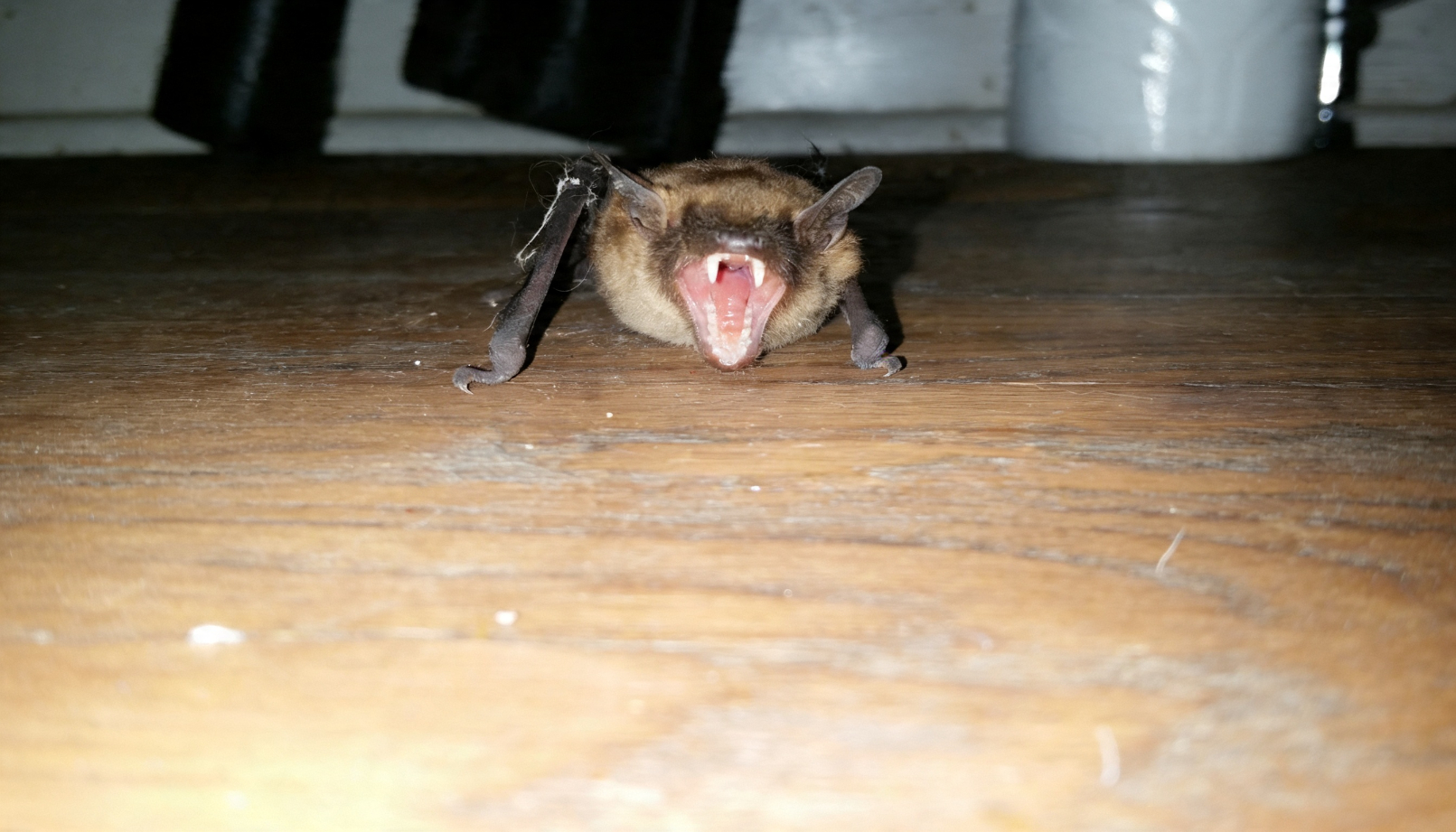
Bats can squeeze through an opening as small as a quarter, so they don't need much to gain access. Common signs of a bat colony in your home:
- Sounds in the attic, walls, or chimney around dusk and dawn as bats leave and return
- Guano accumulation in the attic or near entry points — similar in size to rodent droppings but with a strong, distinctive odor comprised of insect parts
- Milky white urine stains and guano on exterior walls and ground below entry points
- A persistent musty or ammonia-like smell in the attic or upper floors
- Visible bats entering or exiting gaps in soffits, fascia, ridge vents, or gable ends at dusk
Do not attempt to handle bats yourself. They are a primary carrier of rabies and should only be approached by trained professionals.
Is Bat Guano Dangerous?
Yes. Bat guano can harbor the fungus that causes histoplasmosis, a respiratory illness that develops when spores become airborne and are inhaled. This is why professional cleanup is important, especially in enclosed spaces like attics where guano has accumulated over time.
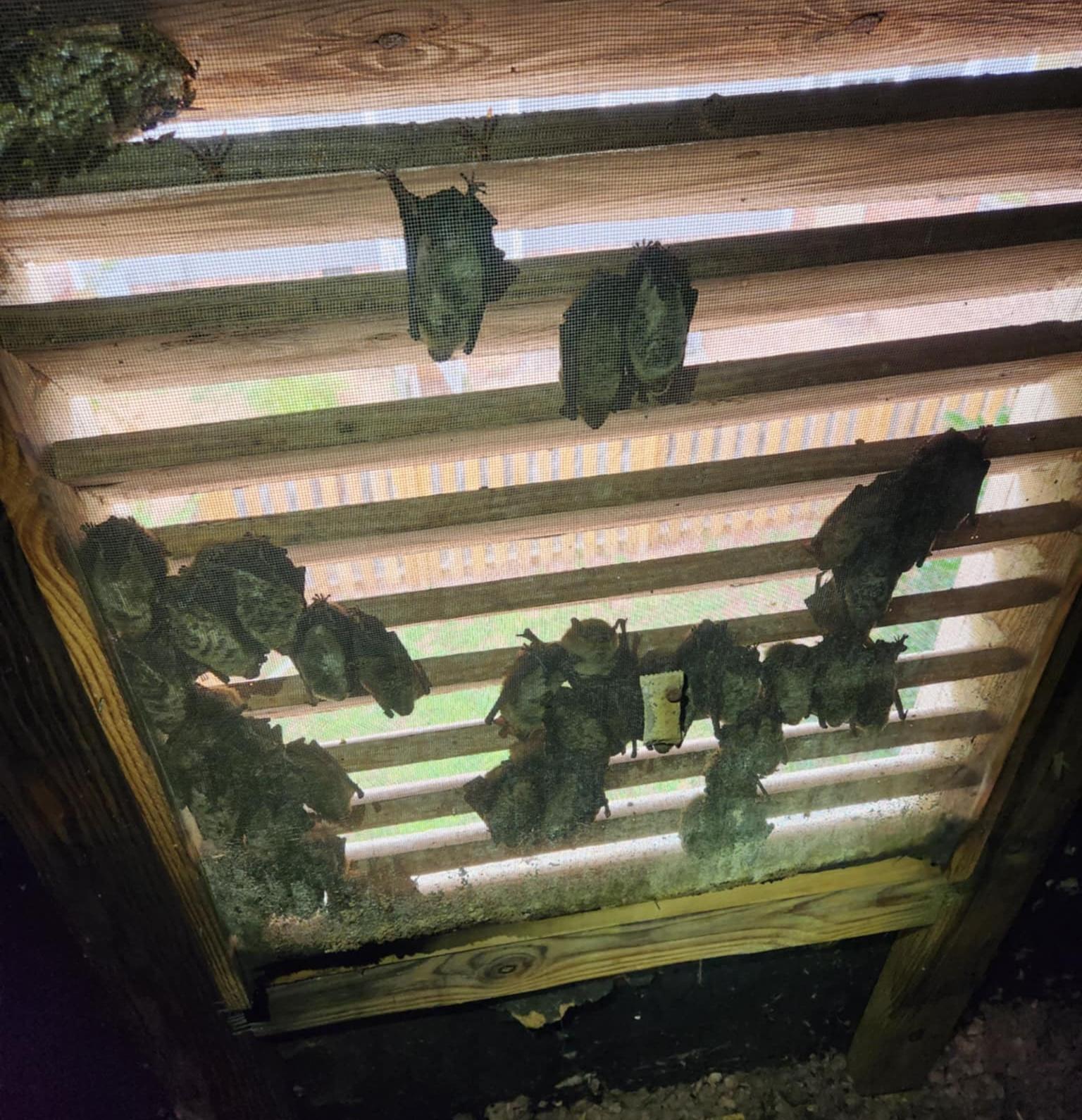
The size of a colony matters too. A small bachelor colony may consist of a handful of bats, while a well-established maternal colony can number in the dozens or even hundreds. The longer the colony has been present, the larger it's likely grown and the more guano has accumulated. A professional inspection is the only reliable way to assess what you're dealing with.
Contact Critter Wranglers for Bat Removal Today
Critter Wranglers is locally owned and operated, licensed by the Tennessee Department of Agriculture, certified by the Tennessee Wildlife Resources Agency, WCT Bat Standards Certified, and fully bonded and insured. Bat removal is one of our core wildlife removal specialties, and our technicians understand the regulations, the seasonal timing, and the exclusion methods required to do the job right.
Contact us today to schedule your free inspection, or give us a call at (865) 973-1095.

Frequently Asked Questions
Can you remove bats any time of year?
Not always. Tennessee enforces a blackout period during the summer maternity season that prohibits bats being disturbed while flightless juveniles are present. Generally, we can perform certain exclusion work year-round but may not be able to remove the bats through valving due to maternity season or cold nights preventing bats from leaving the structure. Call us regardless of the time of year so we can inspect and plan accordingly.
Is bat guano dangerous?
Yes. Bat guano can harbor the fungus that causes histoplasmosis, a respiratory illness that develops when spores become airborne and are inhaled. This is why professional cleanup is important, especially in enclosed spaces like attics where guano has accumulated over time.
How many bats could be in my attic?
It varies. A small bachelor colony may consist of a handful of bats, while a well-established maternal colony can number in the dozens or even hundreds. The longer the colony has been present, the larger it's likely grown and the more guano has accumulated.
Will bats come back after exclusion?
Bats are loyal to their roosting sites and will attempt to return. That's why thorough sealing of every entry point is critical after the exclusion devices have done their work. If the job is done properly, they won't be able to get back in.
Do you kill the bats?
No. Our exclusion method allows bats to leave on their own and simply prevents them from re-entering. This is the most humane and effective approach, and it complies with Tennessee wildlife regulations.