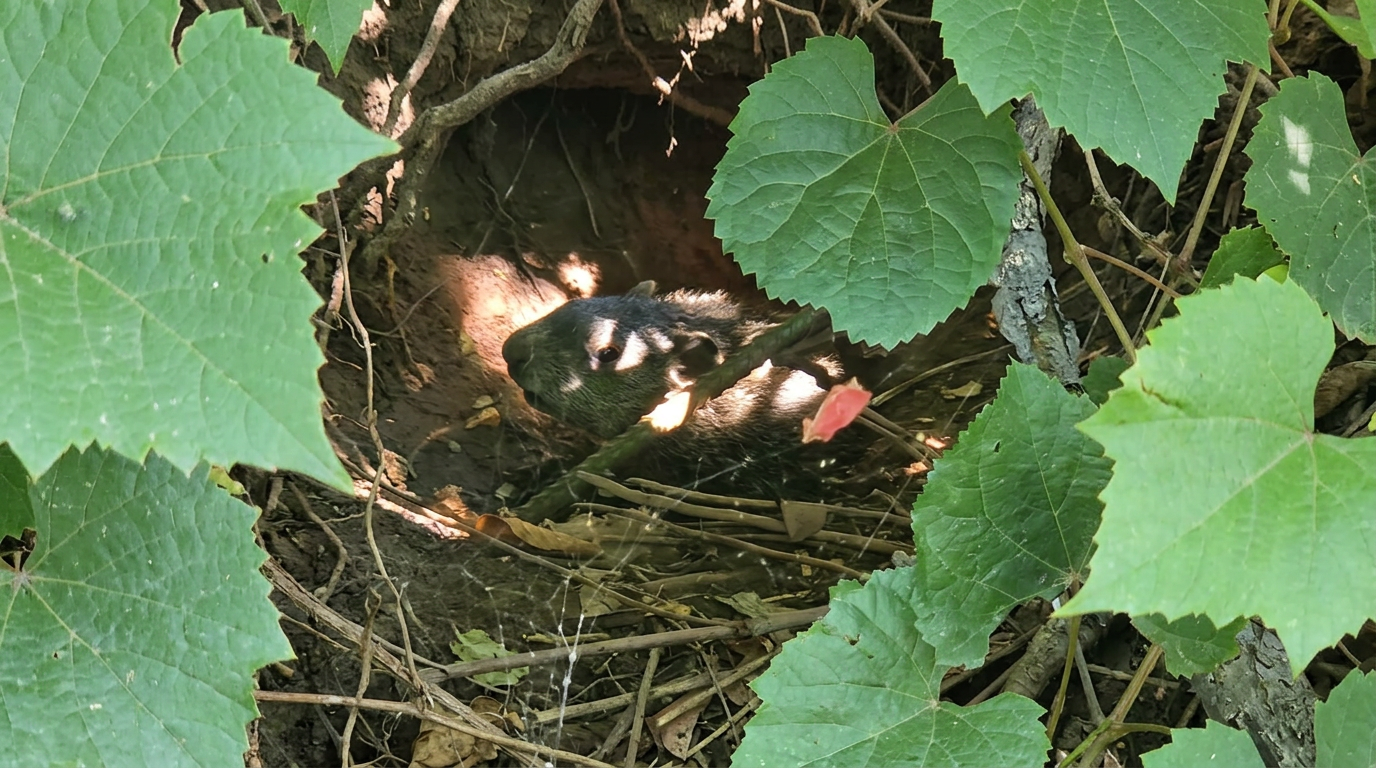

The Damage Groundhogs Cause
Groundhogs, also known as woodchucks or whistle pigs, are prolific diggers with ever-growing incisors that they must constantly wear down through chewing. The problems they create are primarily structural and agricultural:
- Burrowing damage. Their extensive tunnel systems can undermine home foundations, destabilize decks and sheds, damage retaining walls, and create sinkholes in yards. Mounds of excavated dirt at burrow entrances are unsightly and can be hazardous to anyone walking or mowing the yard.
- Garden and landscaping destruction. Groundhogs feed heavily on vegetables, flowers, and ornamental plants. A single groundhog can devastate a garden in short order.
- Structural undermining. We most frequently find groundhogs denning under decks, sheds, barns, and against building foundations. Over time, their tunneling can compromise the structural integrity of these areas.
- Hazards to livestock and equipment. On larger properties, groundhog burrows pose a real risk to livestock that can step into holes and to mowing equipment that can be damaged by uneven terrain and hidden tunnel entrances.
How Our Groundhog Removal Works
Assessment
We locate all burrow entrances, assess the extent of the tunnel system, and identify any damage the groundhog has already caused.
Humane Trapping
We place live traps at burrow entrances and along established travel routes. Groundhogs are creatures of habit, so strategic trap placement based on their behavior patterns is key to a quick resolution.
Burrow Management
After removal, we address the burrow system to prevent it from attracting other wildlife. Open burrows are an invitation for skunks, opossums, and other animals looking for a ready-made den.
Exclusion Recommendations
For groundhogs denning under decks, sheds, or foundations, we can recommend or install barriers to prevent future burrowing access. Our exclusion and repair services provide long-term solutions for properties with recurring groundhog activity.
Signs of Groundhog Activity
- Large mounds of excavated dirt near burrow entrances, typically found along foundations, under decks, near sheds, or along fence lines
- Multiple burrow openings — a single groundhog may maintain up to four entrances
- Damage to vegetable gardens, flower beds, and ornamental plantings
- Visible groundhog sightings during the day, especially in early morning and late afternoon
- Chew marks on wooden structures, decking, or fencing near burrow sites
Can groundhog burrows damage my foundation? Yes. Groundhog tunnels that run alongside or beneath a foundation can compromise its structural integrity over time. The excavated soil creates voids that allow settling, and water can follow the tunnel paths and pool against the foundation. If you see burrow entrances near your foundation, address it promptly.
When Are Groundhogs Most Active?
Groundhogs are true hibernators. They enter their burrows in late fall and sleep through the winter, emerging in early spring. Their most active period is spring through early fall, with peak activity during the warmer months when they're feeding heavily to build fat reserves for hibernation.
The groundhog you remove won't return, but an open burrow system is attractive to other groundhogs and wildlife looking for an established den. That's why we recommend addressing the burrow and installing exclusion barriers after removal to prevent a new animal from moving in.
Groundhogs can bite if cornered or handled, and their large incisors can cause a serious wound. Never attempt to approach or trap a groundhog yourself.
Contact Critter Wranglers for Groundhog Removal Today
Critter Wranglers is locally owned and operated, licensed by the Tennessee Department of Agriculture, certified by the Tennessee Wildlife Resources Agency, and fully bonded and insured.
If groundhogs are digging up your yard or burrowing under your structures, contact us today to schedule your free inspection, or call us at (865) 973-1095. The sooner we address the problem, the less damage their tunnels can cause.

Frequently Asked Questions
When are groundhogs most active?
Groundhogs are true hibernators. They enter their burrows in late fall and sleep through the winter, emerging in early spring. Their most active period is spring through early fall, with peak activity during the warmer months when they're feeding heavily to build fat reserves for hibernation.
Can groundhog burrows damage my foundation?
Yes. Groundhog tunnels that run alongside or beneath a foundation can compromise its structural integrity over time. The excavated soil creates voids that allow settling, and water can follow the tunnel paths and pool against the foundation. If you see burrow entrances near your foundation, address it promptly.
Will groundhogs come back after removal?
The groundhog you removed won't return, but an open burrow system is attractive to other groundhogs and wildlife looking for an established den. That's why we recommend addressing the burrow and installing exclusion barriers after removal to prevent a new animal from moving in.
Do groundhogs bite?
Groundhogs can bite if cornered or handled, and their large incisors can cause a serious wound. They may also carry parasites. Never attempt to approach or trap a groundhog yourself.