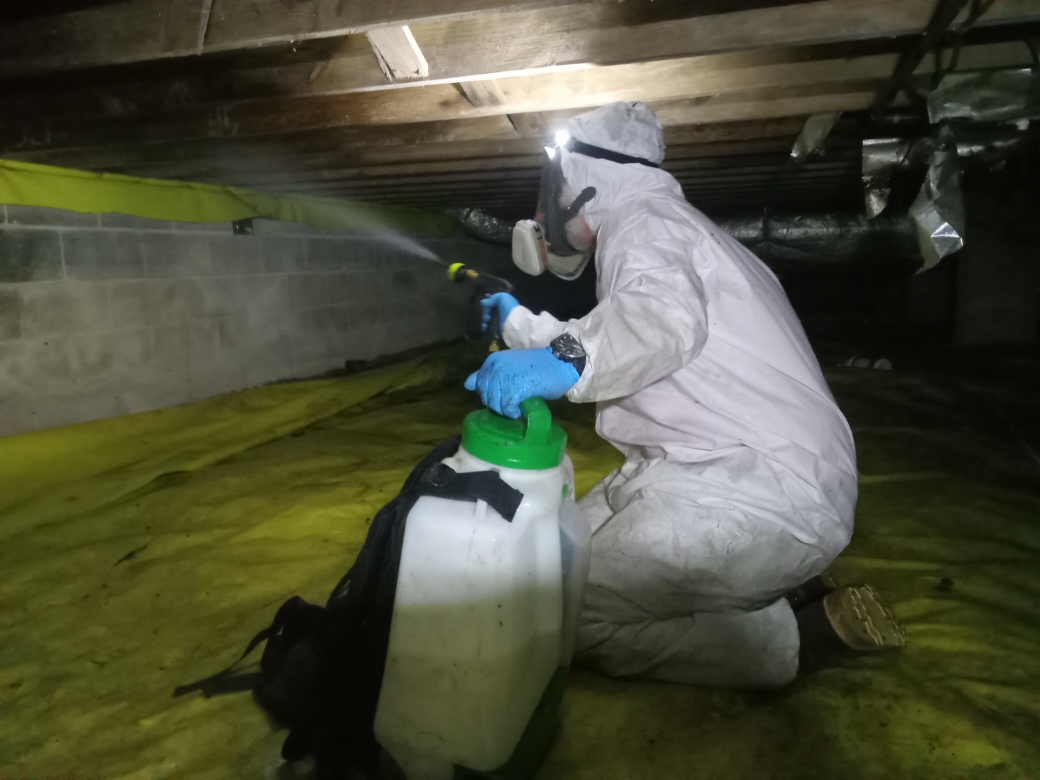
Why Professional Removal Matters
Dead animals inside a structure aren't just an odor problem. They're a health concern. Decomposition produces bacteria and can attract insects that spread into your living areas. If the animal died from disease or poisoning, handling it without proper equipment creates additional risk. And in many cases, the animal is located inside a wall void, above a ceiling, or deep in a crawlspace where accessing it requires experience and the right tools.
Finding the Source
Our technicians are trained to locate dead animals by odor, visual cues, and knowledge of common nesting and travel patterns for each species. In most cases, we can pinpoint the location without unnecessary damage to your walls or ceilings.
Common Situations We Handle
- Dead animal in a wall void (often rodents, squirrels, or opossums)
- Dead animal in the attic or crawlspace
- Dead animal under a deck, porch, or shed
- Dead animal in a chimney or flue
- Dead animal in the yard or on the property
- Persistent odor with no visible source
If It's in There, It Got in Somewhere
A dead animal inside your home is a symptom of an underlying access problem. A dead rodent in a wall means rodents have access to your home. A dead squirrel in the attic means there's an entry point that hasn't been addressed. Removing the animal resolves the immediate odor and health concern — but without exclusion work to seal the entry points, the situation will repeat.
After every dead animal removal, we assess how the animal gained access and recommend exclusion work to prevent it from happening again. Our exclusion and repair services handle the sealing and structural work needed to close off those vulnerabilities permanently.
Our Dead Animal Removal Process
Location
We use odor tracking, knowledge of animal behavior, and visual inspection to pinpoint where the animal is located within the structure.
Removal
We access and remove the animal with minimal disruption to your home. If the animal is inside a wall or ceiling, we make the smallest opening necessary and either repair or recommend repairs afterward.
Cleanup and Deodorization
We clean and deodorize the area where the animal was found to eliminate bacteria, parasites, and lingering odor. For significant contamination, additional treatment may be needed to fully resolve the smell.
Entry Point Assessment
If the animal died inside your home, it got in somewhere. We'll identify likely entry points and recommend exclusion work to prevent the situation from recurring.
More Exclusion and Repair Services
Every component of our exclusion and repair offering works together as a complete solution.
Animal Proofing & Exclusion
Full exterior inspection and professional-grade sealing of every entry point.
Animal Damage Repair
Soffit, fascia, vent, ductwork, and siding repair after wildlife damage.
Attic Restoration
Insulation removal, sanitation, and replacement after wildlife contamination.
Pest-Blok
Professional-grade exclusion material for areas where standard materials won't hold.
Exclusion & Repair Overview
See the full picture of how our exclusion and repair services work together.
Contact Critter Wranglers for Dead Animal Removal
Critter Wranglers is locally owned and operated, licensed by the Tennessee Department of Agriculture, and fully bonded and insured. If you're dealing with a dead animal odor in your home, contact us today or call (865) 973-1095. The sooner the animal is located and removed, the sooner the odor resolves.
Frequently Asked Questions
How long does the smell from a dead animal last?
It depends on the size of the animal, its location, and the temperature. A small rodent in a wall might produce noticeable odor for one to three weeks. A larger animal like a raccoon or opossum can take significantly longer. Professional removal and sanitation resolves the problem immediately rather than waiting for natural decomposition to run its course.
Can you find a dead animal inside a wall?
Yes. Our technicians are experienced at locating dead animals by tracing the odor and understanding where each species tends to travel and nest within a structure. In most cases, we can access and remove the animal with minimal disruption.
What if the odor comes back after removal?
If the underlying cause isn't addressed, it can happen again. A dead rodent in a wall usually means rodents have access to your home. We recommend rodent control and exclusion to prevent the situation from repeating.