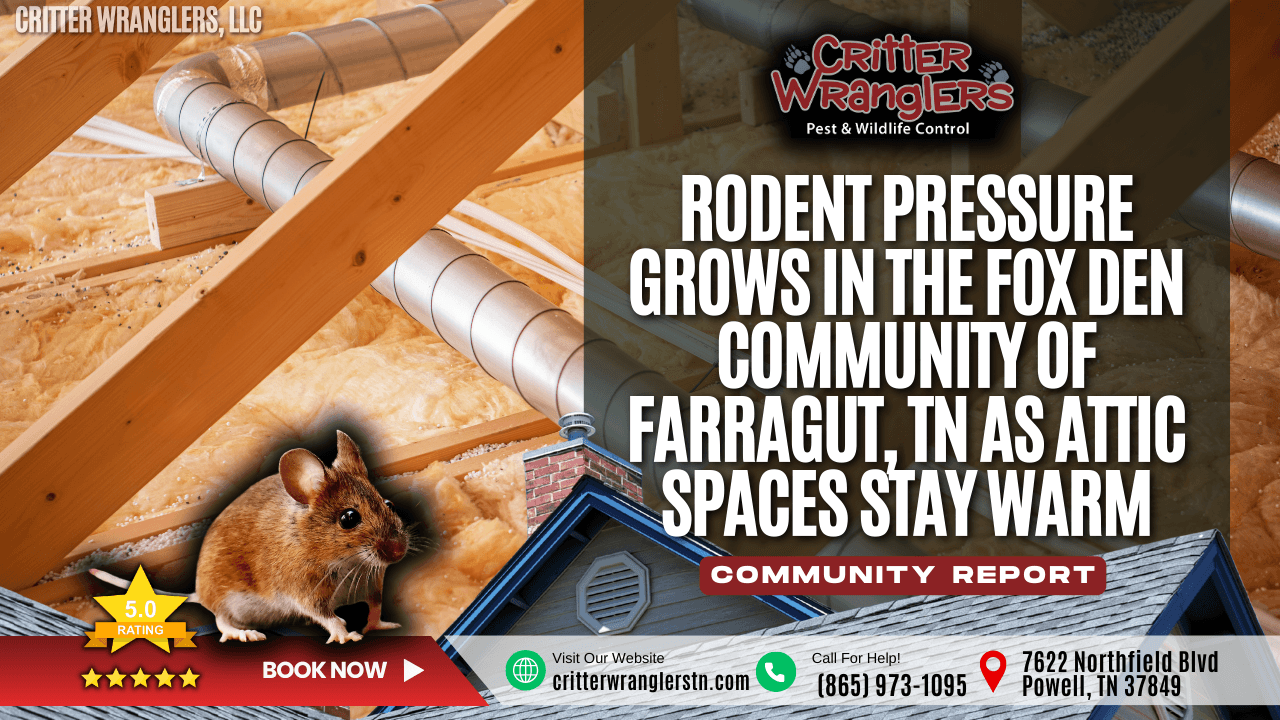
Rodents are moving into Farragut’s Fox Den area as attic warmth attracts them. Causes include nearby pests providing steady recruitment, green spaces and unmanaged waste offering food, and urban nesting in walls and crawlspaces. Mild winters expand breeding windows, while storage gaps invite incursions.
Look for droppings, gnaw marks, frayed wires, nests, and tracks. Health risks involve disease and fire hazards from chewed wiring. Prevent with entry-point sealing and ongoing monitoring; you’ll discover practical steps further on.
Key Article Points
- Attic warmth and mild winters in Farragut TN expand the rodents' breeding window and survival, increasing activity in Fox Den homes.
- Unmanaged green spaces and nearby pest populations provide reliable food sources and steady rodent recruitment.
- Entry points around utilities, rooflines, vents, and gaps enable continual access to attics and upper walls.
- Regular preventive sealing, maintenance, and moisture control deter intrusions and reduce attractants that draw rodents inside.
- Quarterly inspections of soffits, eaves, penetrations, and vent screens, plus attic ventilation maintenance, curb ongoing infestations.
Causes Behind the Rise in Rodent Activity
Several factors contribute to the rise in rodent activity in Farragut, TN. Local conditions converge to create a favorable environment for adaptable rodents. An endemic pest profile across nearby neighborhoods sustains steady recruitment, while green spaces and unmanaged waste provide reliable food sources. Urban nesting habits enable concealment in tight structures, from walls to crawlspaces, reducing exposure to predators and harsh weather. Commuter patterns and landscape design influence movement, guiding rodents toward human habitats seeking shelter and resources. Storage practices at residential properties frequently fail to deter incursions, allowing easy access to pantry items and pet food. Seasonal shifts, especially milder winters, expand breeding windows and survival rates. Prevention hinges on integrated measures: sanitation, sealing entry points, and routine monitoring to disrupt habitual pathways. ETPCA provides ongoing training and resources to support effective pest management and compliance with relevant regulations. Pesticide management guidance from EHS helps ensure safe and compliant use of pesticides on campus.
Attic Warmth as a Magnet for Nuisance Wildlife
Attic warmth acts like a beacon for nuisance wildlife, drawing rodents and other critters into homes where shelter and easy food are plentiful. This warmth encourages sustained rodent activity and invites opportunistic species to explore upper spaces. The result is more frequent intrusions and increased foraging inside the attic corridor.
Attic warmth lures rodents into homes, boosting intrusions and foraging.
- Reduced insulation and warm crevices attract nuisance wildlife seeking shelter
- Access points and vents become gateways for continual rodent activity
- Seasonal temperature swings amplify opportunistic behavior, sustaining visits
In Farragut, attic warmth translates into persistent nuisance wildlife challenges, raising maintenance concerns and short-term deterrence needs. Homeowners should prioritize sealing gaps, upgrading insulation, and inspecting attic entry routes to limit rodent activity while maintaining energy efficiency and structural integrity. Prioritized, proactive planning reduces risk and cost over time. a 1-4 word phrase
Common Signs Homeowners Should Watch For
Common signs of rodent activity can appear in a hurry or creep in quietly, but spotting them early helps prevent bigger problems. The pattern of droppings is telling: small, pellet-shaped evidence concentrated along baseboards, cupboards, and hidden corners. Gnaw marks on wood, plastic, or insulation indicate ongoing activity and can signal entry points. Frayed wires or damaged insulation hint at nesting and chewing behavior, potentially elevating fire risk. Unusual smells or a lingering musky odor may accompany activity in concealed spaces. Nests built from paper, fabric, or plant fibers reveal sustained presence. Tracks or smudges along dusty surfaces show footprints. Listen for scurrying sounds in walls or ceilings, especially at dawn or dusk. Watch for new builds, wildlife corridors that attract intruders into attic spaces.
The Health and Safety Risks Posed by Rodents
Rodents pose clear health and safety threats that homeowners should not overlook. In Farragut’s attic spaces, gnawing and nesting can introduce disease vectors and trigger allergic responses, conditions that demand attention beyond surface concerns. People should weigh the real risk of contamination from droppings and urine, as well as potential fire hazards from wiring damage. The discussion references studies about rodents to ground risk awareness, while acknowledging that many pest control myths can overstate or understate danger. A measured approach prioritizes prevention, containment, and professional assessment when thresholds are met.
- Focus on verified health risks supported by studies about rodents and errant housing practices.
- Distinguish facts from pest control myths that skew risk perception.
- Pursue timely inspections and targeted remediation to reduce exposure.
Effective Preventive Measures for Farragut Homes
Preventive measures in Farragut homes focus on practical, proactive steps to deter rodents.
Key tactics include securing entry points, maintaining clean surroundings, and using targeted attic insulation tips to reduce nesting opportunities.
The discussion will explore simple home tweaks and credible tactics that support ongoing prevention.
Preventive Home Tactics
Effective preventive measures start with a simple, proactive approach: identify and seal entry points, reduce attractants, and maintain clean surroundings to lower rodent activity around Farragut homes.
Preventive Home Tactics translate knowledge into daily practice. The aim is steady reduction of risk through disciplined routines, not dramatic fixes. Below are practical steps that support a mastery posture without relying on speculative claims.
1) Inspect: regularly seal gaps around doors, pipes, and vents; verify attics, crawlspaces, and foundations for new openings.
2) Reduce attractants: trim vegetation away from walls, manage trash, and store food in rodent-proof containers.
3) Maintain cleanliness: clear clutter, address spills promptly, and ensure proper attic ventilation and sealing to support rodent proofing.
discussion ideas about Subtopic,not relevant to the other H2s: attic ventilation, rodent proofing.
Attic Insulation Tips
Attic insulation is a simple line of defense against both energy waste and rodent activity in Farragut homes; proper insulation reduces temperature swings that can invite pests into attic spaces.
This approach emphasizes measurable steps rather than vague promises.
Start with an objective attic inspections to identify gaps, compromised vapor barriers, and areas of compression or moisture intrusion.
Seal penetrations around vents, wires, and fixtures before upgrading insulation.
Prioritize dense-packed cellulose or high-performance fiberglass batts rated for attic use, and maintain an adequate ventilation balance to avoid moisture buildup.
For long-term performance, plan insulation upgrades that meet current code and climate needs, and re-evaluate after any major renovation.
Regular checks ensure consistent R-values and pest deterrence without excessive energy loss.
Step-by-Step Remediation Strategies for Infested Attics
How should one begin when tackling an infested attic? The process centers on disciplined steps that minimize exposure and waste. Focus first on securing the space, then removing pests, and finally restoring infrastructure with preventive checks.
- Contain and assess: seal entry points, map damage, and plan targeted removals, prioritizing safety and minimal disruption.
- Remove and sanitize: use humane traps or approved methods, restore airflow, disinfect surfaces, and bag waste properly to prevent recontamination.
- Restore and defend: replace compromised insulation, seal gaps, install rodent-proof barriers, and recheck attic ventilation to support long-term attic restoration.
Rodent control hinges on consistent monitoring; restoration depends on durable sealing and clean, updated insulation strategies. Regular audits prevent recurrence and preserve attic integrity.
How Cold Snaps Drive Critters Indoors
Cold snaps push small critters to seek shelter, and indoor spaces offer a warm refuge when outdoor temperatures plunge. In cold climates, animals move from exposed nooks to sheltered structures. This shift increases encounters with attics, walls, and crawlspaces as they seek food, water, and safety. Homeowners notice higher activity at dawn and dusk, plus unusual sounds and odors. Quick inspection focuses on entry points, gaps, and insulation gaps that invite intrusion. Seal obvious routes and maintain vents to limit access without trapping resident wildlife. The goal is to reduce attractants while respecting humane treatment of attic critters. Effective measures blend preventive sealing, routine monitoring, and prompt cleanup of food sources to prevent repeated invasions.
| Entry points | Seasonal shifts | Preventive actions |
|---|---|---|
| Gaps around utilities | Temperature-driven moves | Rodent-proof sealing |
| Roofline vulnerabilities | Habitat preference | Regular monitoring |
Long-Term Home Maintenance to Deter Pests
Long-term maintenance hinges on consistent, practical actions that deter pests before they become established. In Farragut’s attic-focused context, deliberate design and upkeep matter as much as seasonal vigilance. Practical routines reduce opportunities for rodents and other invaders while supporting energy efficiency through passive strategies like geothermal cooling and solar ventilation. A disciplined schedule keeps gaps sealed, vents protected, and moisture controlled, preserving a deterrent environment over years rather than weeks.
1) Inspect and seal entry points quarterly, prioritizing soffits, eaves, and utility penetrations.
2) Integrate passive cooling features—geothermal cooling loops and solar ventilation—to reduce attic heat buildup that attracts pests.
3) Maintain cleanliness and drainage, including vent screens, attic access, and moisture controls, to deter nesting sites and food temptations.