The Knoxville Pest & Wildlife Guide

Ant trails reappear in Tan Rara, West Knoxville, after warm rain as moisture reactivates foraging networks. Humidity prompts extension and reconnection of routes, reinforcing established lanes with pheromones. Substrate moisture and microclimate cues influence trail persistence, direction, and speed. Emergent trails form where moisture and substrate conditions are favorable, while boundary awareness helps ants navigate sidewalks and edges. Timing aligns with late-spring habitat cues, including leaf litter and soil moisture. More details await for those curious about these subtle ecological signals.
- Written by: Staff
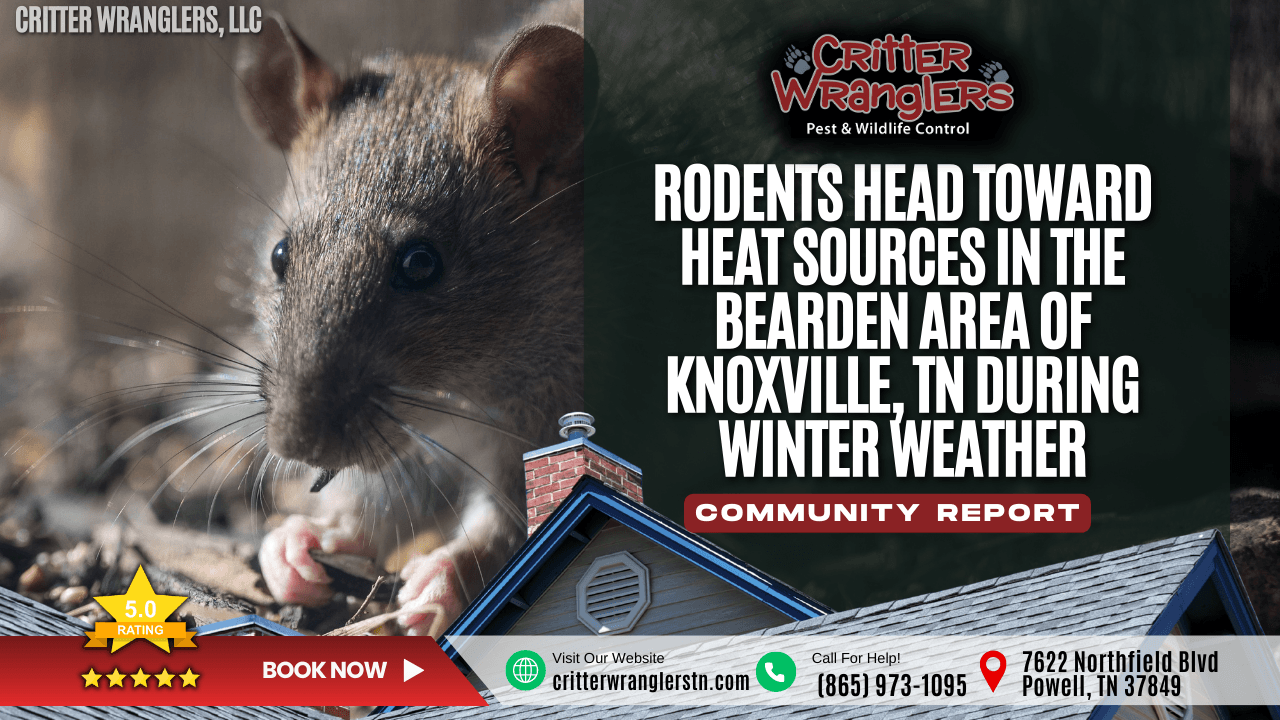
Winter cold pushes mice and rats toward heated indoor spaces in Bearden, Knoxville. Rodents seek warmth to support metabolism, reproduction, and survival when outdoor resources are scarce. They target gaps around foundations, vents, pipes, and door thresholds, especially near insulated walls and plumbing.
- Written by: Staff

Centipedes tend to show up more in West Knoxville bathrooms when cooler weather settles in. They’re drawn to indoor warmth, moisture, and shelter, especially in bathrooms with damp corners or leaks. Entry points like gaps under doors, around pipes, and near fixtures help them slip inside.
- Written by: Staff

In Wentworth, West Knoxville, cold weather drives rodents to seek warmth and shelter inside homes. They prioritize reliable heat and secure cover, moving toward interiors with higher ambient temperatures. Common warm havens include utility rooms, basements, and spaces behind appliances. This behavior raises health and property risks, from contamination to gnawing. Prevention focuses on sealing openings, securing food, and reducing clutter. Ongoing monitoring and coordinated actions support long-term control, with more details available as you continue.
- Written by: Staff